Journaling for Healing - A Survivor's Guide to Getting Started
If you're reading this, you might be wondering whether journaling could help you heal. Maybe you've heard it suggested by a therapist or friend, or you've seen it mentioned in a healing article. Or maybe you're just desperate to make sense of what happened to you and are willing to try anything—even something as simple as putting pen to paper.
Here's what we know: journaling works. Not because it's magic, but because it gives your healing a place to live. As women who have faced and overcome trauma, we know that healing isn't something that happens to you—it's something you do, one day, one entry, one honest thought at a time. And journaling is one of the most powerful tools you can use to reclaim your light after sexual assault.
The beautiful thing about journaling is that it requires nothing but you, a pen, and a willingness to be honest. No judgment. No "right way" to do it. No performance. Just you, your thoughts, and the freedom to process whatever comes up.
This guide is for survivors who want to use journaling as part of their healing journey. Whether you're in the first week after assault or many years into recovery, journaling can meet you where you are. We'll walk you through why it works, how to start (even if you feel too overwhelmed), and how to use journaling to move through shame, anger, confusion, and eventually, toward hope.

💙 No matter what you've been through, nothing will take your light.
Why Journaling Matters for Trauma Survivors
When you experience sexual assault, your brain is flooded with overwhelming emotions and fragmented memories. Your body is in survival mode. Making sense of what happened feels impossible—and that's not a failure on your part. It's a normal neurological response to trauma.
Journaling interrupts that cycle by giving your nervous system permission to slow down. When you write, you're literally translating the chaos in your mind into words. That act of translation—moving from overwhelming feeling to written word—helps your brain process what happened. It moves the trauma from the emotional part of your brain (where it's stuck in a loop) to the thinking part (where you can actually process it).
Research shows that survivors who journal experience significant reductions in PTSD symptoms, anxiety, and anger. But beyond the science, here's what we hear from survivors again and again: journaling made me feel less alone with what happened. It gave me permission to feel everything—rage, grief, confusion, hope—without judgment.
When you write, you're also creating evidence that you survived. Your journal becomes a record of your strength. Months from now, when you feel stuck, you can look back and see how far you've come. That matters more than you might think.
Journaling also gives you something that trauma often takes away: control. You control what you write. You control when. You control who sees it (probably no one—and that's okay). In a healing journey that can feel overwhelmed by doctors' appointments, therapy sessions, and other people's questions, your journal is entirely yours.
Getting Started—Even If Everything Feels Too Hard
We get it. You might feel too numb to write. Too angry. Too ashamed. Too confused. The thought of opening a blank page might feel impossible right now.
That's why we're going to make this really, really simple.
You don't need a beautiful journal. A spiral notebook from the dollar store works. A Google Doc works. The back of an envelope works. Your journal doesn't need to be fancy because this isn't about creating something beautiful. It's about creating something honest.
You don't need to write in full sentences. Write bullet points. Write one word. Write "I don't know what to write" over and over if that's what's true. Some of the most healing journal entries are just lists of feelings, fragments, or angry scribbles. That counts.
You don't need to write often. Once a week. Once a day. Once a month. Whenever you need to get something out, that's the right time.
You don't need to share it. Many survivors keep their journals private—sometimes forever. Your journal is not for anyone else. It's not about being "good" or eloquent or making sense. It's about being real.
Here's how to actually start:
Pick your medium. Notebook? Laptop? Voice recording you transcribe later? Whatever feels accessible to you right now.
Find a quiet moment. Even five minutes. Even if you feel like you have nothing to say, sit down.
Write the first true thing. "I feel angry." "I don't know how to feel." "I'm scared." "I have no idea what I'm doing." All of these are perfect first entries.
Don't edit yourself. If you pause to worry about spelling or grammar or whether this makes sense, you've broken the spell. Keep going. This is for you.
Give yourself permission to be messy. Cross out words. Write "this doesn't make sense" in the middle. Scribble furiously. Cry on the page. Your journal is not a performance—it's a safe place.
Journaling Prompts and Practices for Different Stages of Healing
Journaling looks different depending on where you are in your recovery. Here are some approaches for different moments:
For the First Days or Weeks (When Everything Is Overwhelming)
When you're in acute crisis mode, journaling isn't about processing the assault itself. It's about grounding yourself in the present and naming what you need.
Try prompts like:
What do I need right now? (Safety, rest, support, space, movement—there's no wrong answer)
Three things that feel solid to me today
What my body needs from me today
One thing I did today to take care of myself, even if it's small
For Moving Through Anger and Rage
Anger is a sacred part of healing. Your anger is telling you the truth: what happened was wrong, and you didn't deserve it. Some of the most powerful healing happens when you let yourself be furious on the page.
Try:
Letters you'll never send (to the person who hurt you, to yourself, to the world)
"I'm angry about..." (keep going—there's always another layer)
What I deserved instead
What I wish I could tell younger me
For Processing Shame and Blame
Shame tells you a lie: that what happened was your fault. It wasn't. But shame is persistent, and sometimes you need to write your way through it.
Try:
What shame is telling me right now (write out the lie)
The truth is... (counteract each shame message with truth)
Moments when I felt innocent/not responsible
What my wisest self would tell me about blame
For Grief and Loss
You lost things in your assault—your sense of safety, your body as you knew it, parts of your identity. Grieving that is essential.
Try:
What I've lost
How my life would be different if this hadn't happened
Memories of feeling safe, before
What I'm grieving today
For Hope and Growth (When You're Ready)
Healing isn't linear, but there comes a moment when you can see how far you've come. Journaling can help you recognize resilience, small victories, and the possibility of a future.
Try:
Three things I did this week that showed my strength
How I'm different now because I've survived this
One thing I'm looking forward to
Ways I'm reclaiming my light
What If You Get Stuck? Overcoming Common Journaling Blocks
"I don't know what to write."
That's not a reason to stop—it's exactly what to write about. "I don't know what to write" is a starting point, not a dead end. Keep writing that sentence until something else emerges. It will.
"I can't access my feelings—I feel numb."
Numbness is a protection. Your nervous system is wise. Write about the numbness itself. "I feel numb. I can't feel anything. I don't know if that means I'm broken." This is healing too.
"What if someone finds my journal?"
Your privacy matters. Lock it. Keep it in a safe place. Use a password on a digital document. Some survivors write knowing no one will ever see it, and that freedom is essential. Others use code or abbreviations. Do whatever helps you feel safe.
"I feel like I'm not doing it right."
There is no wrong way to journal. If you've put pen to paper and gotten something out of your head and onto the page, you've done it right. Full stop.
"I wrote something and it made me feel worse."
That can happen. Sometimes writing opens a door you weren't ready for. That's not failure—that's important information. You might need more support. You might need to take a break and come back. You might need to talk to a therapist about what came up. Honor what your body is telling you.
Making Journaling Part of Your Healing Practice
Journaling works best when it's consistent, but "consistent" looks different for everyone. You might journal daily or once a month. Both are valid.
Here are some ways to make it a sustainable part of your healing:
Create a ritual. Light a candle. Make tea. Sit in your favorite spot. Tell yourself, "This is my time for healing." Rituals signal to your nervous system that you're safe and this is a container for important work.
Pair journaling with other practices. Some survivors journal after meditation, after grounding techniques, or after movement. Others pair it with a walk. Combining journaling with other healing practices amplifies the effect.
Use a prompt when you're stuck. You don't have to create prompts from scratch. The 1st 28 Foundation's healing journals come with guided prompts designed by survivors, for survivors. There's no shame in using structure when you need it.
Remember that imperfect journaling still counts. You don't have to write essays. You don't have to be consistent. You don't have to feel inspired. Messy, angry, confused journaling is still journaling. It still works.
Celebrate what journaling helps you do. Notice when you journal and feel even slightly lighter. Notice when you see patterns. Notice when you can read an old entry and see how much you've healed. These moments matter.
Resources to Support Your Journey
Journaling doesn't have to be solitary. Many survivors find healing in community. Join The 1st 28 community to connect with others, access workshops on journaling and healing, and find support.
External Resources for Crisis and Support
RAINN National Sexual Assault Hotline — 1-800-656-4673 (24/7, confidential, free)
RAINN Online Chat — If you prefer to chat rather than call
Crisis Text Line — Text HOME to 741741
NSVRC (National Sexual Violence Resource Center) — Comprehensive resource hub for survivors
Related Reading
If you want to go deeper, we recommend: "How to Get Through Your First Week After Sexual Assault"— A practical guide for immediate recovery.
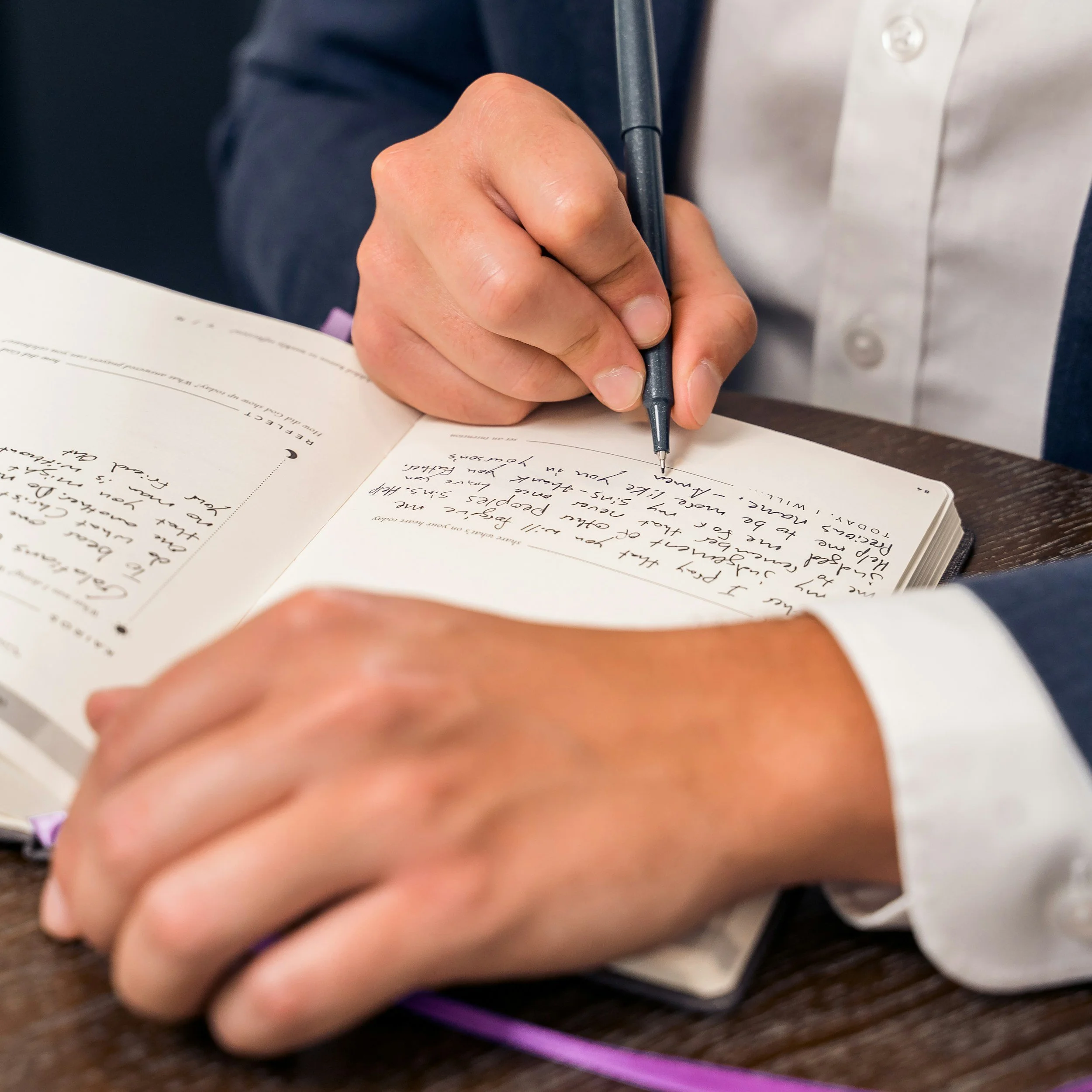
Your Light Is Still There
Healing isn't something that happens to you. It's something you do, one day at a time, one honest thought at a time. Journaling is one of the most direct routes we know to that healing.
Your journal is a conversation with yourself. It's a place where you get to be messy, angry, confused, hopeful, and everything in between—without judgment, without performance, without anyone else's expectations. It's where you can tell the truth about what happened and what you're feeling.
And here's what we know from experience: the act of putting pen to paper, of translating your inner world into words, of witnessing your own healing unfold—that matters. You matter. Your voice matters. Your healing journey matters. No matter what you've been through, nothing will take your light. 💙
Ready to start? Pick up a pen. Open a blank page. Write one true thing. That's all it takes.