

Our Why - From Crisis to Purpose
At The 1st 28 Foundation, we believe in the transformative power of the written word. Journaling offers survivors of trauma a private sanctuary to process emotions, reflect on experiences, and embark on a journey toward healing. By putting pen to paper, individuals can navigate their feelings, gain clarity, and reclaim control over their narratives.
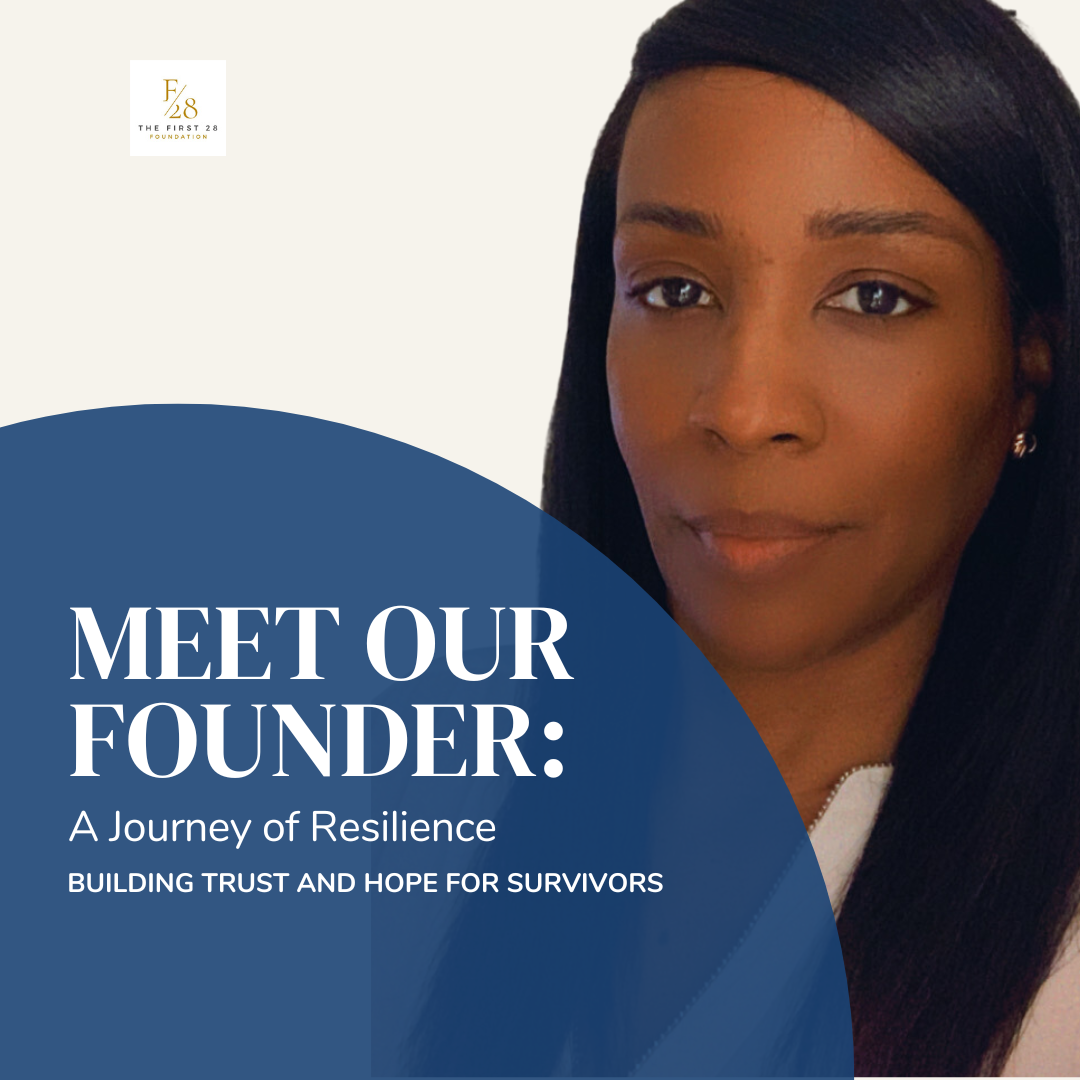
When she arrived at the hospital emergency room after her sexual assault, she was overwhelmed, afraid, and unsure of what came next. As she sat with a crisis nurse, trying to process what had just happened, she was given a small but repeated piece of advice: "You should try journaling. It can help you process everything." The suggestion made sense. Writing had always been a way for people to work through their emotions, to put their pain into words, to make sense of what felt impossible. But when she asked the nurse if they had a journal she could use, the answer was no.
Instead, she was handed a folder full of resources, contact information for local support groups, crisis hotlines, and the police station's assault assistance team. The resources were helpful, but they didn't address the right now.
She left the hospital with nothing tangible to help her process what she was going through.
Days turned into weeks, and as she mustered up the courage to reach out to the organizations listed in that folder, she heard the same advice repeated:
"You should try journaling."
She asked again: "Do you have one I can use?"
Again, the answer was no.
Why was journaling so widely recommended, yet never provided? Why were survivors left to figure it out on their own when they were already navigating so much?
A Second Realization: The Power of Documentation
What she discovered wasn't just about sexual assault. It was about the trauma itself.
Whether trauma comes from sexual assault, domestic violence, accidents, loss, or other life-altering events, survivors face the same barriers:
Therapeutic recommendations without tools: Professionals encourage journaling, meditation, and processing, but don't provide the resources to make it happen.
Lack of structure: When you're in crisis, having a guided journal with prompts makes healing accessible. Without it, the blank page feels impossible.
Missing community: Survivors often feel alone, unaware that others have walked similar paths.
Workplace struggles: Many trauma survivors try to return to work without understanding their rights, accommodations, or protections.
The 1st 28 Foundation was born from her lived experience, but it exists for every survivor, regardless of their trauma.
The Birth of The 1st 28 Foundation
She knew she had to take action. She created The 1st 28 Journal, designed specifically for survivors, as a tangible, structured tool that serves both as a method of healing and, if needed, a reliable way to document events.
Her mission became clear:
No survivor should have to search for a journal after being told to write.
No survivor should find out too late that proper documentation could protect them.
Every survivor deserves access to the right tools from the moment they ask for help.
No survivor should navigate workplace recovery alone.
Why The Need for Accessible Journaling Resources
〰️
Why The Need for Accessible Journaling Resources 〰️
-
✺
Expressive Writing Reduces Anxiety & Stress:
A 2019 study found that trauma survivors who engaged in expressive writing experienced significant reductions in anxiety and stress levels.
-
✺
Improved Mental Health Outcomes:
Research indicates that expressive writing can lead to improved mental health outcomes, including reduced symptoms of depression and post-traumatic stress disorder (PTSD). -
✺
Enhanced Physical Health:
Studies have shown that individuals who practice expressive writing may experience better physical health, such as improved immune function and reduced blood pressure. -
✺
Accessible Therapeutic Tool:
Therapeutic journaling is especially useful for reaching trauma survivors in need of evidence-based mental health care who live in remote areas. -
✺
Barriers to Accessing Support Services:
A report highlighted that long waitlists, unaffordable options, and lack of financial resources prevent many survivors from accessing necessary support services, emphasizing the need for accessible tools like journaling. -
✺
Positive Impact on PTSD Symptoms:
Engaging in expressive writing has been associated with reductions in PTSD symptoms, including anxiety and anger, aiding in the overall healing process.
No More Empty Hands
Today, she is making sure that no survivor walks away empty-handed. Through The 1st 28 Foundation, survivors have access to free journals distributed to hospitals, police stations, crisis centers, and advocacy organizations, career development resources for survivors rebuilding their professional lives, digital healing tools and guided journal prompts, a supportive community where survivors know they are not alone, and education to help survivors understand their rights in the workplace and beyond.
By sharing her story, she hopes to inspire others to reclaim their voice, their strength, and their light.
No matter what you have been through, nothing will take your light.
Putting Journals Where They Are Needed Most

At The 1st 28 Foundation, we believe healing starts with having the right tools at the right moment. Survivors are frequently encouraged to journal as a way to process trauma, but too often they are left to find their own way with no journal in hand.
We are changing that.
We provide free, blank journals to hospitals, crisis centers, police stations, advocacy organizations, and support groups so that when a professional recommends journaling as a healing tool, they can place one directly in a survivor's hands. No more empty hands. No more missed opportunities for healing.
We are currently building our distribution network in Delaware and actively seeking partnerships with organizations and facilities that serve survivors in our region. If you work with survivors and believe this resource could make a difference in your community, we would love to connect.

Continue Your Healing Journey Starting Today
Healing is not just about the first 28 days. It is a lifelong journey. Whether you are in the middle of your recovery or years past the initial crisis, there is always value in having a space to process emotions, set goals, and reflect on your progress.
We see you. We built this for you.
Get Your Free Guided Journal Prompts
Start or restart your healing with 28 powerful journal prompts designed specifically for trauma survivors. Each prompt is crafted to help you process emotions safely, gain clarity on your healing journey, set meaningful goals for recovery, reflect on your progress and growth, and reclaim your voice and your story.
No credit card required. No strings attached. Just tools for healing.
Healing is not linear. It is personal. It is powerful. It is yours.
Join Us in Making a Difference
Join Us in Making a Difference
By supporting the Journals for Healing initiative, you're providing survivors with a powerful tool for self-expression and recovery. Together, we can ensure that no survivor walks their path alone.
✺ Frequently asked questions ✺
-
We provide free journals to crisis centers, hospitals, police stations, advocacy organizations, and shelters. These organizations then provide them to those in need.
-
Organizations interested in distributing journals can reach out to us through our partnership page to learn moreabout collaboration opportunities.
-
Our journals are designed specifically for survivors, featuring guided prompts, reflection exercises, and open space for free writing to help process emotions and aid in the healing journey.
-
Yes! If you are not currently connected to a hospital, crisis center, or support group distributing our journals, you can purchase a journal directly through us. Every purchase helps fund our initiative to provide free journals to survivors in immediate need.
-
Currently, our journals are available in a standard paperback format designed for ease of use and portability. We are exploring additional formats to accommodate diverse needs.
-
We love hearing from survivors, supporters, and organizations. If you’d like to share your experience with our journal, please reach out through our feedback form.