Why Black Women Are Leaving Corporate America and What They Are Building Instead
The most educated demographic in America is also the one being shown the door the fastest. That says everything about the system and nothing about the women leaving it.
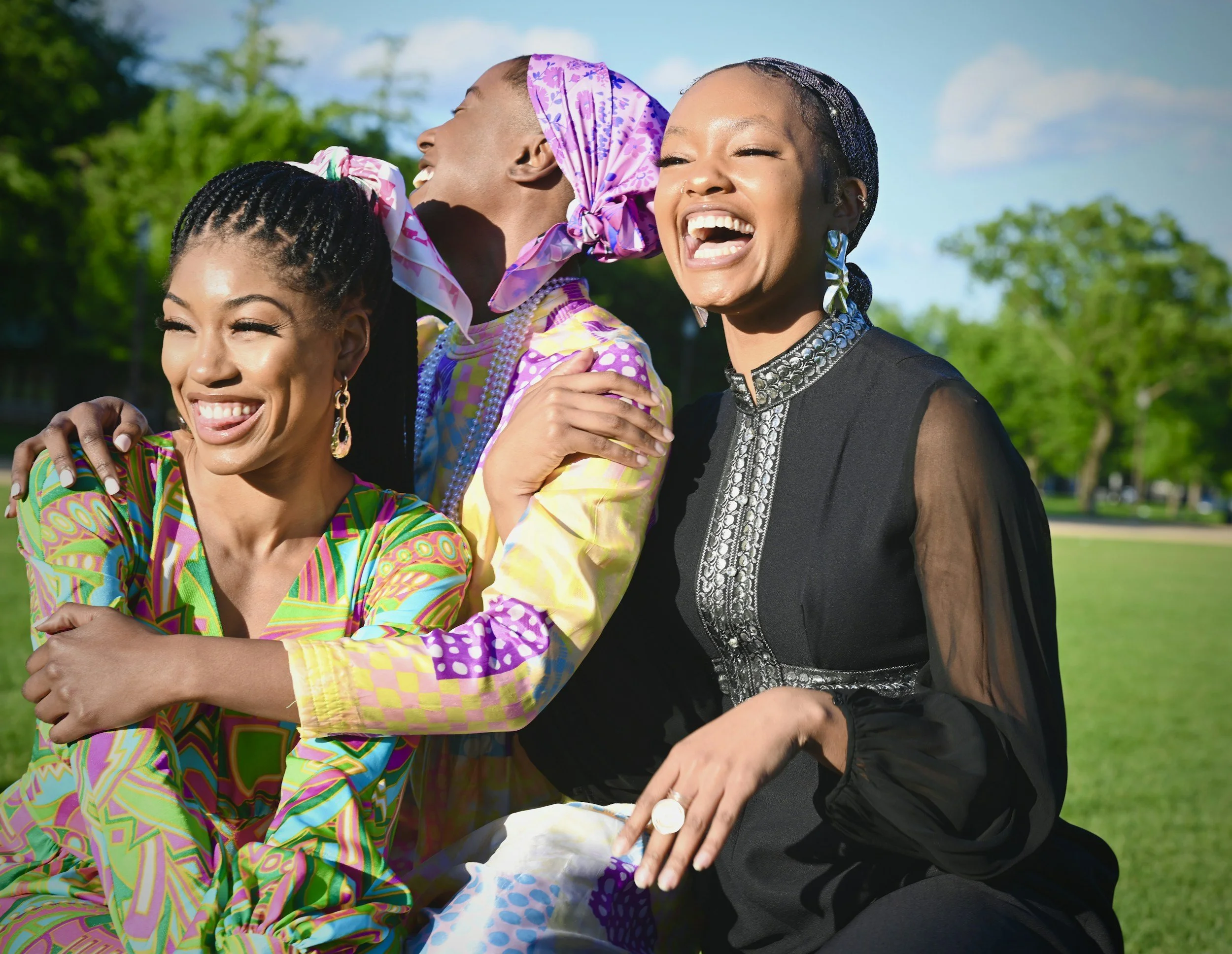
More than 300,000 Black women left the U.S. workforce in a three-month window in 2025. The Brookings Institution puts the full-year figure closer to 600,000. The headlines called it an exodus. Some called it a crisis. The more accurate word is a reckoning. One that was a long time coming and that is producing something the same headlines have largely failed to cover.
What actually happened?
The short version is that a combination of federal job cuts, DEI program rollbacks, and corporate restructuring hit Black women harder than any other demographic in the workforce. In April 2025 alone, 106,000 Black women were laid off according to U.S. Bureau of Labor Statistics data. Black women's labor force participation rate dropped below that of Latinas for the first time in over a year. Their unemployment rate climbed from 5.4 percent to 7.3 percent by December 2025.
The longer version is that none of this happened in a vacuum. More than 2,600 DEI-focused roles were eliminated across corporate America between early 2023 and 2025. The public sector, where Black women have historically held their strongest foothold in middle-class employment, was gutted by sweeping policy decisions. The industries hit hardest included education, government, healthcare, and professional services. The exact industries where Black women had built careers, often over decades.
“600,000 Black women were economically sidelined in 2025 through layoffs, forced exits, and labor force departures.”
What the numbers do not capture is the texture of what it felt like to be a Black woman inside many of those organizations in the months before the exits. The DEI rollbacks did not just eliminate programs. They sent a message about how permanent the welcome had ever been. A lot of women received that message clearly and started making different plans.
Was any of this a surprise?
For the women living it? Not entirely. The promotions were already not coming at the rate they should have been. McKinsey's 2025 Women in the Workplace report found that for every 100 men promoted to manager, only 60 Black women received the same promotion. By comparison, 82 Asian women and 82 Latina women were promoted to that same level for every 100 men. That gap did not appear in 2025. It has been documented for years.
The pay gap was already there too. Wells Fargo's 2025 research found that Black women earn 70 cents for every dollar earned by white men. White women earn 83 cents to that same dollar. That 13-cent gap between Black women and white women compounds over a career into a meaningful difference in savings, in financial cushion, and in the ability to absorb risk when the time comes to make a move.
The most educated demographic in America is also the one that gets passed over for promotion most consistently, paid the least relative to its male counterparts, and shown the door first when organizations decide to cut. That is not a motivation story. It is a math story. And a lot of Black women did the math in 2025 and came out on the other side of it with a different plan.
The surprise, if there was one, was the speed. The scale of the exits in such a short window caught a lot of people off guard. The conditions that produced it had been building for a long time.
So what are they actually building?
This is the part of the story that deserves more attention than it is getting. While corporate America was cutting Black women loose, Black women were starting businesses at a rate that outpaced every other group of women in the country.
“Black women-owned businesses grew by 13% between 2024 and 2025, more than three times the 4.4% growth rate of women-owned businesses overall. Revenue for businesses without employees surged by 8%.”
According to CNBC, Black women represent 42 percent of net new women-owned businesses, three times their share of the female population. Harvard Business Review research found that 17 percent of Black women are starting or running new businesses, compared to 10 percent of white women and 15 percent of white men. Those are not small numbers. They are a direct signal about where talent goes when organizations choose not to retain it.
What is being built spans industries. Consulting. Digital products. Coaching and advisory services. Community platforms. Healthcare navigation. Content and media. Administrative and operational services. Creative agencies. The common thread is not the industry. It is the decision to stop waiting for an organization to recognize what was already there and start building something where that recognition is not a prerequisite for getting paid.

What does this mean for the woman still on the sidelines?
Here is what is true about the women who are building successfully right now versus the women still sitting on an idea they have not moved on yet. The difference is rarely skill. It is almost never drive. The gap that shows up most consistently is access to the right information at the right time, delivered in a way that accounts for where you actually are, not where a program assumes you should be.
Black women have historically been excluded from the informal networks where business knowledge actually travels. The mentors who have done it. The rooms where the roadmaps get shared. The peer groups where someone tells you what she wishes she had known before she started. That exclusion is real and it has a cost. It is also not permanent.
The skill gap is not the problem. The access gap is. Knowing that distinction matters enormously when you are trying to figure out what is actually standing between you and the thing you want to build.
This Is Not New. It Is Just Louder Now.
Black women have been building since before there was infrastructure to support it. The number of Black women-owned businesses grew by more than 100 percent between 2019 and 2024. That trajectory did not start with layoffs. It started with a generation of women who decided that ownership was a more reliable path to security than employment in systems that had shown them, repeatedly, how quickly that security could disappear.
What 2025 did was accelerate something already in motion. It removed some of the ambivalence. It made the math clearer for women who had been quietly doing the calculation for years.
If you are one of those women, you are not behind. You are exactly where a lot of the most capable people in this country were before they figured out what they were actually building. The information exists. The tools exist. The market is ready for what you already know how to do.
The next chapter does not start when conditions are perfect. It starts when you decide that waiting for perfect conditions has already cost you enough.
The Next Chapter
A career development program of The 1st 28 Foundation. Built for women who are ready to move but need a clear path forward. Over 17 years of HR experience behind every resource we create.